Plot: What’s it about?
As you’d expect since this is a movie directed by Luis Bunuel, a traditional synopsis is almost impossible to create. The movie moves from vignette to vignette, each stranger than the one before and of course, with no real chains to keep the film’s parts on the same track. After the movie is over, you can put the pieces together and see Bunuel’s vision more clearly, but even then, that isn’t crystal clear. And to be more exact, to go into that would ruin the fun of seeing the film and making your own decisions. The general theme is freedom and liberty, but in this case, that isn’t always shown as a positive. The film opens on a scene based in 1908, then zooms into the present, but not the present we know. In fact, all we know is tossed aside in this surreal world and instead, we have a realm of total chaos and shocks. But like many of Bunuel’s movies, the film doesn’t need to make sense all the time, its just fun to watch the chaos.
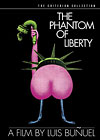
The films of Luis Bunuel are not suited to everyone’s tastes and more to the point, it takes a certain kind of film buff to appreciate his works. Bunuel loves to pile on social and political context, then spice up the mixture with surreal touches that sometimes defy all logic and reason. In less skilled hands, such a movie would turn out to be a total disaster, but Bunuel can work magic with that eclectic approach. Of all of his films, one of the most surreal and in my honest, best projects is The Phantom of Liberty. The movie leaps from one strange, over the top sequence to the next, with no room to breathe in between. The result is a brisk, unique experience that has to be seen to be believed. Granted, the sheer chaos on screen does limit the depth, but his usual messages seem to be intact. Criterion’s DVD isn’t loaded to the hilt, but the movie looks and sounds terrific, plus a couple of extras have been tacked on. In the end, The Phantom of Liberty is an unusual, highly enjoyable picture that earns a most high recommendation.
Video: How does it look?
The Phantom of Liberty is presented in 1.66:1 anamorphic widescreen. The print still has some rough places, but not to the degree I expected, very clean and impressive indeed. That is due to Criterion’s digital restoration process, which really enhanced the visuals here. The film’s subdued color scheme comes across well here, so don’t be alarmed by the faded hues found in this transfer. I saw no errors with the contrast either, as black levels seem accurate and detail level is very strong here. Another fine treatment from Criterion here, fans should be very pleased indeed.
Audio: How does it sound?
The original French soundtrack is preserved here via a mono option, which seems to be more than up to snuff. I heard some small source flaws at times, but nothing even close to serious, so I doubt anyone will be let down here. The vocals seem on the mark and never get muddled, while the music and sound effects stream through with no real problems. I think as far as 1974 mono tracks go, this is a good one and as such, I won’t complain much. This disc also includes new & improved optional English subtitles.
Supplements: What are the extras?
This disc includes an introduction with screenwriter Jean-Claude Carriere, as well as the film’s original theatrical trailer.