Plot: What’s it about?
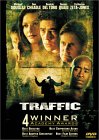
Lately, there hasn’t been much to crow about when it comes to the movies that Hollywood has been putting out. Countless sequels to movies that no one liked to begin with, “action packed” computer-generated movies that are as hollow as they are stupid…the list goes on. So leave it to Stephen Soderbergh, who won a Best Director Oscar for his work here, to put out not one, but two great movies in the same year. We all know Soderbergh for his previous work on Out of Sight and Sex, Lies and Videotape, but my question is this: Where was this guy hiding in the 90’s? Soderbergh takes an ensemble cast made up of Michael Douglas, Catherine Zeta-Jones (Douglas), Benicio Del Toro and Dennis Quaid (just to name a few) and concentrates on an issue that has affected essentially all of us. The war on drugs. What’s so great about the movie is that it’s so realistic. And realism, in some cases, is bad. Do we want to know that some 25% of high school Seniors are using illegal drugs (and not just alcohol)? Most likely not. But the problem exists and Traffic shows us just how powerless we are against drugs. Another interesting thing about Traffic is the way it’s told. We’re so used to movies following along a straight line, but lately that has changed. In somewhat of a “Tarantino” esque fashion, Traffic is like three stories in one.
The plot is simple, yet broken down into three basic sections. They loosely intertwine with some characters overlapping into the other section, but for the most part, all are sustained within their respective plotlines. The first “story” introduced concentrates on Javier Rodriguez Rodriguez (Benicio Del Toro) and his partner. Javier is an honest cop, working in Mexico. He makes $318 a month, but seems satisfied with it saying “that’s what the job pays”. Not interested in the big money, Javier is loyal to his friends and is trying to make a difference when it comes to the war on drugs. I’m not sure if these comments should be reserved for the “video” section of the review, but each section has a different hue that reflects that part of the story. The Mexican part is filmed in a gritty, brownish tone that reflects the life that Javier and his partner live. Dirty and not at all perfect. We are then introduced to the second section, this one taking place in Ohio. Michael Douglas plays Bob Wakefield, a judge who has just been appointed as the country’s “drug czar”. Though idealistic, he meets with his predecessor and sees that the job is almost pointless. It’s not until he starts to visit the drug problems first hand, that he realizes what a problem the drugs are. To make matters worse, his daughter and her friends are experimenting with freebasing cocaine. Not your average drug. The signs of problems show and it’s up to Bob to not only lead the country in the war against drugs, but lead his family as well. Again, the tone reflected in this section is that of a corporate blue. The palette looks washed out and heartless, much like that of the job that Bob is about to take. It sets the mood perfectly.
The third section concentrates on two DEA agents (Don Cheadle and Luis Guzman). After arresting a local drug dealer who is going to testify, they set up surveillance on a local well-to-do San Diego couple. Not knowing her husband has been involved in drugs, Catherine Zeta-Jones’ character is the pregnant housewife who sees how fast her world can be turned upside down by the threat of drugs. Now fearing for her life and the life of her child, she struggles to come to terms with what her life has become, and also a way to try to make it with her husband behind bars. Though this may be the most “light-hearted” of the three, it crosses the paths with the first story. Shot in a yellowish hue (similar to that of Erin Brockovich), the third section of Traffic contains some of the best dialogue and suspense. All in all, Traffic may well be one of the better movies that I’ve seen in a quite some time. It affects different people differently. I saw this with my girlfriend in the theater and she couldn’t stop crying, while I was bone dry. Traffic has something for everyone, and it may be debated for years to come why this didn’t get the Best Picture Oscar it so deserved. Who knows? One thing that can be said is that it will make you think twice about the drug problem that is prevalent in our country as well as the world. Highly recommended.
Video: How does it look?
As mentioned above, Traffic contains a variety of ways in which the image is presented on the screen. While the 1.85:1 anamorphic image is excellent in presenting it the way it should be seen, it’s kind of hard to tell exactly how well this image really is. With most every other release, we judge the image by detail, artifacting, edge enhancement, black levels and so on. Traffic is filmed in parts, with a lot of those elements purposely intended. The scenes tend to be burnt out or have grain on them or the image tends to be a bit blurry. So how do you judge a film like Traffic when it comes to the image? I can say that in the scenes in which these elements aren’t in effect (i.e. the image is like a normal movie), the colors and everything is perfect. Sharp contrast, no artifacting and so on. But this debate could go on and on…what it all boils down to is that when it comes to presenting Traffic in your home theater, you’ll be seeing it as it’s expected to be seen. So while this may not be the “perfect” transfer, it’s as close as it comes to being that way.
Audio: How does it sound?
A menu option that I’ve never seen before has “Dolby Digital 5.1” (the mix that was heard in theaters) or “Dolby Surround” (an optimized version of the soundtrack in 2 channels for home theater). Naturally, I chose the 5.1 version and what Traffic excels in visually and along the plot lines, it lacks in the soundtrack. For the most part, it’s a mono mix, but with some surround effects prevalent enough to let you know that your speakers aren’t going to waste. At times, I almost had to turn the volume up. The characters are so naturalistic that they don’t have that “perfect speech” that so many movies have. They mumble. Real people mumble. That’s a fact. So unless you’re fluent in Spanish, you’ll be reading a lot of subtitles, and not concentrating on about 1/3 of the audio. Still, the soundtrack doesn’t rock as so many other movies out there, but you hear what the characters are saying, and that’s essentially the point.
Supplements: What are the extras?
Probably the worst thing about Traffic on DVD is that it doesn’t have a lot of supplements. One thing that DVD owners are getting spoiled and used to is the plethora of extras on some discs. Finally a disc comes along that we’re all getting ready for, and it doesn’t have that many extras. Also, Stephen Soderbergh has made his share of special editions in the past (Out of Sight, Sex, Lies and Videotape), so it’s with this and Erin Brockovich that he hasn’t laid down a commentary track. Why? Personally, I don’t know. You’d figure that this movie would have a special place in his heart, as this is the movie that won him an Oscar, but who knows? With movies coming out and then being re-released as “Ultimate Editions” or whatnot, it’s quite possible that we’ll eventually see a more robust version of this movie. But as of right now, we don’t know. Anyway, enough complaining, and let’s see what’s on this disc…
Aside from some trailers and TV spots, there is a Behind the scenes look at “Inside Traffic”. This feature is like so many others we’ve seen that it almost becomes redundant to explain what it is. Put it this way, if you’ve seen one “Behind the scenes…” you’ve seen them all. A photo gallery is also included as a nice touch, but aside from those scant extras, that’s it. I can’t recommend seeing Traffic enough, though you may want to rent the DVD until (or if) a decent version of this comes out.