Plot: What’s it about?
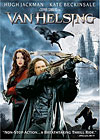
At its core, “Van Helsing” is everything that’s wrong with American pop-culture filmmaking in its most distilled, purest form. The “film”, such as it is, is little more than a framework (or an excuse) for a 132-minute onslaught of computer graphics wizardry. There is virtually no character development and, while the climax does give us a ham-handed attempt at emotion, this is still, at its essence, a film without a soul. The irony couldn’t be thicker, I grant you. Hugh Jackman does what he can with the material (and he’s actually quite good given what he’s handed to work with). As the title character whose job it is to hunt down and kill Count Dracula, Jackman’s very presence exudes a kind of masculine coolness that can only happen organically with the right casting. Kate Beckensale plays the obligatory love interest (although just when either of them became “interested” seemed to elude me the first go around), and she, too, is very good. She may survive things that would kill a normal person countless times throughout the movie only to play a key role in a “realistic” twist toward the film’s climax, but that’s beside the point. One doesn’t watch a film like this to care about realism (or even to pretend to understand it), and so it is with our eyes eagerly awaiting the goodies and our brains on temporary leave that we dive headfirst into the breathtaking, numbing experience that is “Van Helsing”.
I will never again condescend to presume that any film is merely a series of loosely connected plot threads inter-cut with action set pieces lest I first compare it to the visual barrage of this picture. There is so much going on at any one point in “Van Helsing” that you can literally miss an entire subplot with an ill-timed restroom break. Of course, such subplots are relatively needless, as no real background is needed to enjoy the real meat and potatoes of the film on their own, relentlessly episodic terms. I felt while watching this that it played more as a series of ILM experiments than a film. As such, it can be decadently entertaining. There’s simply no need here to get too involved. The images simply wash over you in a seemingly unending effort to maintain your unflinching attention to the screen. This is the kind of film that has no memorable lines and no memorable characters, but has countless undeniably memorable moments. If this doesn’t end up being the demo disc of choice for the next year or so, I’ll be astonished beyond words. It’s not that the film is that good; it simply plays so much like a demo on its own that it’s just destined to be viewed in clips.
Now don’t get me wrong. I’m not saying there’s no value to be found here. There’s simply no real substance, either. But then, if we all longed for substance over spectacle, the 1997 Academy Awards would have played out very differently. As it is, “Van Helsing” is the kind of film that everyone loves to hate and hates to love in today’s climate of aggressive non-participants. Sure, we complain that movies just aren’t made with the kind of heart that they used to be, but we just can’t help but trade in those few dollars to unwind with a flick that doesn’t even tempt us to think. Sure, this movie reeks of the kind of style over substance and quantity over quality method of filmmaking that we all profess to abhor, but we’re still drawn irrevocably to its promise of thrills without consequence, chills without fear, and action without impact. Part of the job of the American filmmaker today seems to be finding that new way to keep us all selling two hour segments of our lives away to a vicarious, artificially-created roller coaster ride set to celluloid. Of course, on the flipside, we’re still careful not to go out of the house without adequate sun protection or to waste those two minutes of extra life on a cigarette. My grandfather always said, “no one ever gets rich selling people what they need – it’s what they want that sells”. A movie like “Van Helsing” makes me truly understand what he meant for the first time in my life. Not because I didn’t enjoy it…but because I did.
Video: How does it look?
The 1.85:1 anamorphic widescreen transfer for “Van Helsing” is just gorgeous. While just a hair short of perfection (I never felt my jaw drop with amazement), this is quite impressive. There’s a lot going on in this film, and no one can fault this presentation for not being up to the challenge brings this material to life in a big way. Most of the movie is dark, but the fine object detail afforded by this transfer makes it worth the eyestrain, and color is handled exceptionally well. While this is a stylized film in many ways (and, as such, the color palette is manipulated to reflect atmosphere), this transfer does a fantastic job of staying true to the intended look of the picture. I noticed no signs of artifacts or print defects. Edge enhancement is kept to a minimum (quite a relief with such a high-contrast production), and no compression problems cropped up that I could detect. All in all, this is a very fine transfer that takes full advantage of the clarity afforded to the format. This isn’t quite reference material, but the bar has been set so high these days that that’s not saying much.
Audio: How does it sound?
While only a fool would ever accuse this track of being anything but completely aggressive, I find it impossible to give the Dolby Digital 5.1 Surround track on this release my top rating. The main reason for this admittedly has less to do with the effectiveness of the mix as the inherent desensitization that the movie itself brings to the listener’s ear. One can only hear so many panning sound effects and over-the-top score cues until the audio begins to get monotonous in its persistence. While there’s plenty to admire here (dialogue, even through the film’s countless booming action sequences, is crisp and intelligible), there’s a certain level of ambiance that’s lost in all the flare. On the plus side, there’s nothing particularly “wrong” with what is here, with deep, forceful bass response and good separation between channels. The surrounds get more than their average workout, and this is sure to be the demo disc of choice for quite a while for its sheer power and consistent level of “wow” moments. For my tastes, though, sometimes less is more.
Supplements: What are the extras?
If the pervading theme of “Van Helsing” is “quantity over quality”, then no one will fault Universal for presenting us with anything here but an all too appropriate DVD release. While it seems at first glance that this disc is just packed to the gills, what’s actually there is a bit disappointing. The best of the extras is the feature commentary with the director. Sommers is quite talkative on this track, and he dominates the proceedings with anecdotal musings that come at a pace that’s more than a match for what’s happening on screen. This is a great commentary. The second commentary by producer Bob Ducsay pales by comparison with frequent laspes into silence and an overall lack of enthusiasm that so graces the former track. Still a worthwhile listen, as this track delves more into the effects and the rigors of actual production, but it’s just not as engaging and consistent as the director’s track. The tour of Dracula’s castle is a 3D interactive look at the set, and it’s not nearly as entertaining as it sounds. Essentially a sequence of menu screens and cheesy voiceovers, this isn’t going to win any DVD awards. “Bringing The Monsters To Life” is just about as in depth and thorough as a thousand other making-of fluff pieces you’ve seen lately, and it’s strictly a run of the mill effort that doesn’t tell you much you couldn’t have figured out yourself by watching the finished film. “You Are In The Movie” has got to take prize for the corniest addition to any DVD I’ve seen in recent memory. Basically, the “extra” is a behind-the-scenes camera mounted on the filming camera during the shoot. And – are you ready for this – the actors had no idea! Come on, Universal. You can do better than this. Lastly, we have “The Legend Of Van Helsing” (or “why Hugh Jackman is the best swashbuckling hero of all time”, as it quickly turns itself into) and a surprisingly good blooper reel that’s quite entertaining in its own right. A demo of the Van Helsing game for the X Box and the theatrical trailers are also included. To make a long story short, this disc’s extras don’t amount to much more than a mediocre effort despite the deceptively lengthy lineup. My advice to fans: buy this one for the exceptional treatment of the film and skip the filler.