Plot: What’s it about?
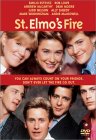
As a group of friends celebrate their college graduations, they are faced with real life and all the obstacles present in front of them. In prior times, they could focus on having a good time and little else, but now the future is right in front of them and not some distant concept. The time has arrived for them to make some important choices, ones that will change their lives forever and of course, shape their friendships, perhaps even the lack thereof. Wendy (Mare Winningham) has to deal with pressure from her wealthy family to live up to their standards, but her ideas for the future don’t match theirs, not even close. Instead of what they want, Wendy wants to be with Billy (Rob Lowe), but of course, her family wouldn’t want that for a second. Billy has no real goals and is trying to find himself, all while dealing with his wife and young child. Leslie (Ally Sheedy) and Alec (Judd Nelson) try to keep their love alive, but it keeps slipping away and unless something changes soon, the end is imminent for their relationship. At the same time, Kevin (Andrew McCarthy) has his eye on someone in the group, Kirby (Emilio Estevez) seeks out an older woman, and Jules (Demi Moore) flirts with the edge and shows no signs of slowing down her fast lane lifestyle…
A staple of Brat Pack cinema, St. Elmo’s Fire is more dramatic than the comedies most of the stars had been in, but it fits in rather well, nonetheless. As movies like The Breakfast Club and Sixteen Candles had realistic drama, but done in a comedic vein, the transition to the drama found here is smooth, without a doubt. But where those movies were about high school students, St. Elmo’s Fire deals with a little bit older group of friends, but for all we know, it could be the same people from those films, thrust into a new set of situations. The drama is there to be sure, with a sense of realism that allows us to relate to the events and of course, that’s vital in a picture like this. But St. Elmo’s Fire is not all melodrama, as it has a lot of humorous moments and that is also key in the film, as we need those times to remember the good sides of these relationships. I can’t say that I connect with this movie as much as I do with Sixteen Candles or The Breakfast Club, but it is a solid picture and one that deserves a place on any 80s cinema lover’s shelf. This disc from Columbia is a well prepared one and as such, there’s no reason for fans to miss this one.
This movie has a cast loaded by 80s standards, although I doubt this group could fill many theaters in this era. Judd Nelson has the honor of being my favorite performer here, as he drives home a solid, but flawed effort. He is a little limited because of his character’s persona, so his turn often seems shallow, though I suppose that is just how it should be. He is able to play off his costars with ease, which is no surprise, since he’d worked with many of them on prior pictures. I like Nelson and while he is not too important these days, there was a time when he had a lot of potential and I hope he can find some good roles soon. Other films with Nelson include The Breakfast Club, From the Hip, Making the Grade, and New Jack City. The cast also includes Rob Lowe (Youngblood, Tommy Boy), Demi Moore (Striptease, The Butcher’s Wife), Ally Sheedy (Maid to Order, WarGames), Emilio Estevez (Men at Work, Repo Man), Mare Winningham (Georgia, Turner & Hooch), and Andie MacDowell (Groundhog Day, Short Cuts).
Video: How does it look?
St. Elmo’s Fire is presented in a 2.35:1 anamorphic widescreen transfer. The image here is clean and quite pleasant, a much better transfer than expected. A lot of these 80s movies haven’t aged well, but this one looks terrific and fans will be most pleased. The print used shows minimal grain and debris, so the elements never suffer or become hampered in the least. The colors seem bright and on a natural scope, while flesh tones are normal and consistent throughout. No worries with contrast either, as black levels seem accurate and well balanced, so detail is high and it all looks good here. As far as 80s catalog titles go, this is a very nice visual effort and I think viewers will be more than satisfied, I know I was.
Audio: How does it sound?
This disc houses a 4.0 surround option and while I have no real complaints, I wasn’t too bowled over by the end result here. The basics seem more than covered and that’s what counts of course, but don’t expect too much more than that. The musical soundtrack is richer than expected however, with a nice overall presence and sound effects are in fine, natural form. I found dialogue to be clean, sharp, and never hard to understand, with no evidence of volume troubles I could find to report. This disc also includes 2.0 surround options in English, Spanish, French, and Portuguese, as well as subtitles in English, Spanish, French, Portuguese, Korean, Chinese, and Thai.
Supplements: What are the extras?
This might not be a full fledged special edition, but it has some nice extras, especially for a catalog title from the 80s. The main extra here is an audio commentary by writer/director Joel Schumacher, who provides a talkative and quite informative session. Schumacher allows little silence to be heard and seems to remember a lot about the movie, from the production to the writing process and beyond. You’ll also find some talent files, a brief featurette, John Paar’s Man in Motion music video, and the film’s theatrical trailer.