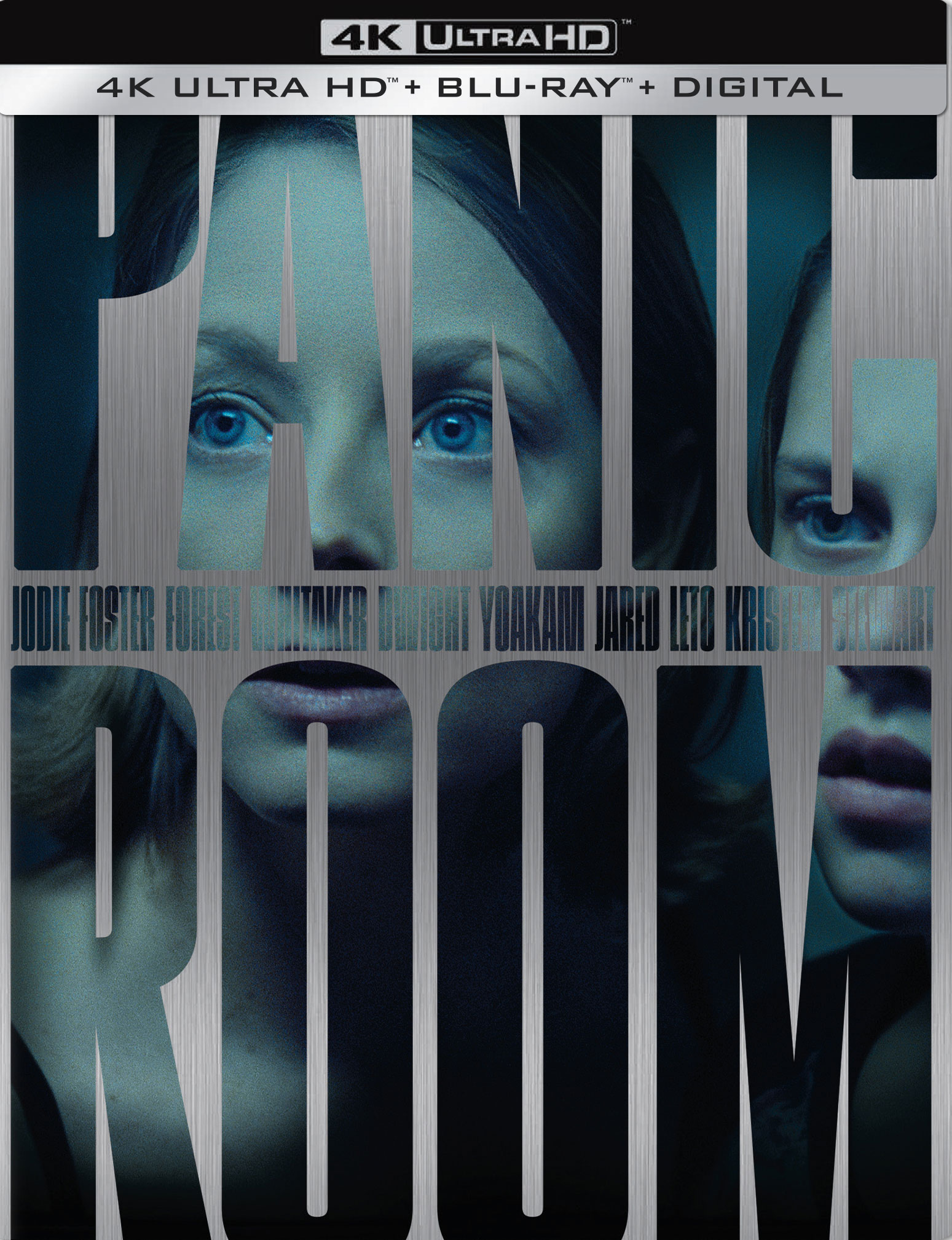
Plot: What’s it about?
What do you do when you’ve made one of the most talked about films in the last few decades? I’m referring to Fight Club, of course. Evidently, if you’re David Fincher, you follow it up with a movie that’s the exact opposite – something that takes place in a Brownstone smack dab in the heart of New York. By the time this film rolled around, Fincher had a few notable films under his belt: Alien 3, Se7en and The Game as well as the aforementioned film with Edward Norton and Brad Pitt. If, by some chance, this one has eluded you then don’t let the premise fool you – just because it takes place inside an apartment, doesn’t mean it can’t be tense. And it is. I remember seeing it in the theater and remember my palms being sweaty from opening to closing. At any rate, let’s get started.
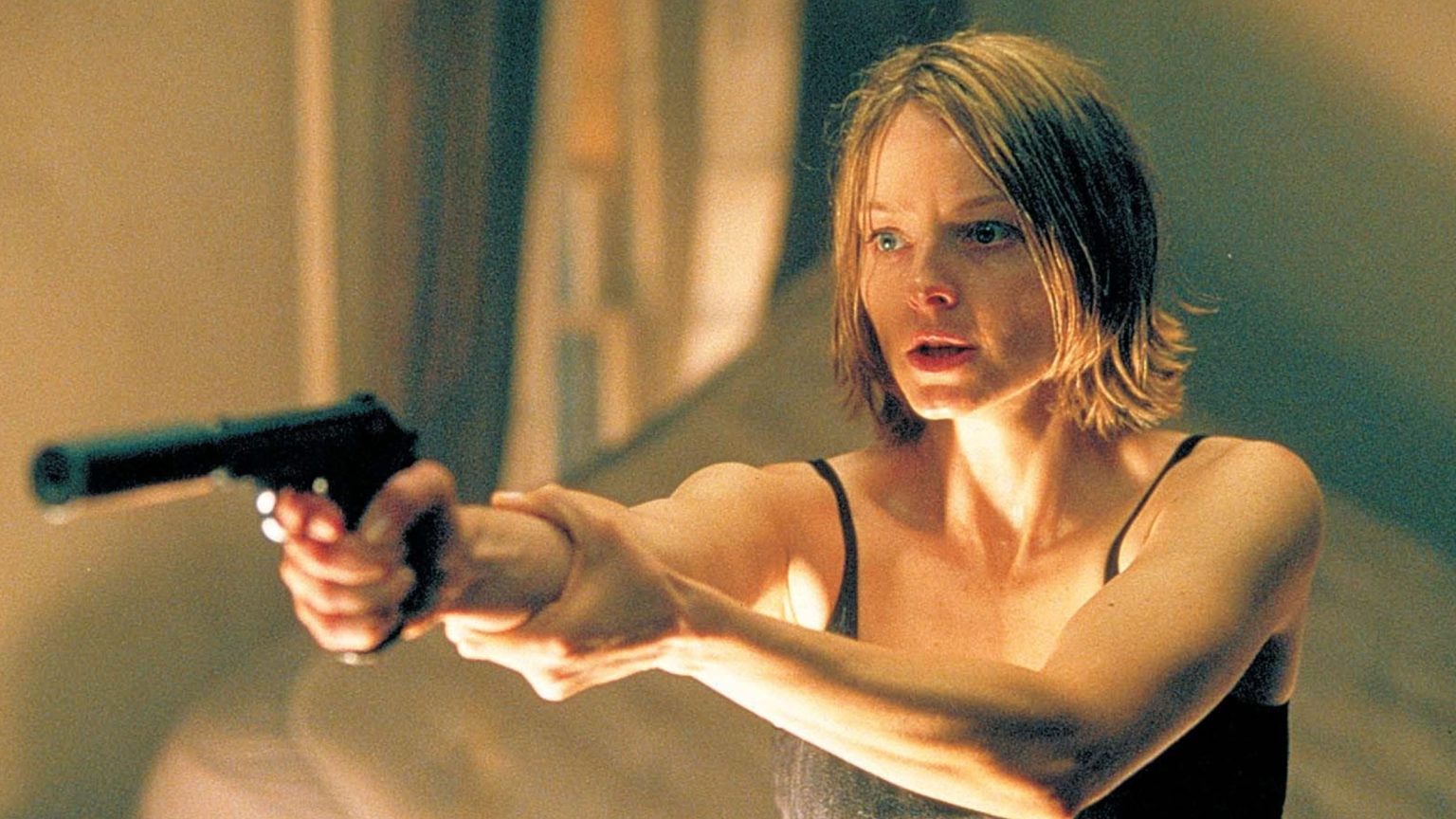
Meg Altman (Jodie Foster) is a divorced women in her thirties, looking to find a new home for herself, as well as her young daughter Sarah (Kristen Stewart). The search leads her to a New York brownstone that doesn’t impress Meg all that much at first look, but it is soon revealed that it has more than meets the eye. The massive mansion is home to a special room, one that is sealed off from the others and has a ton of unique features, the room is called a panic room, the place you go when you’re in extreme danger. Once inside the panic room, you’re able to watch the rest of the house on numerous cameras, all while being sealed off from whatever poses the threat. This is enough to sell Meg on the place and of course, she begins to learn as much as she can about the panic room and how it operates. Soon however, she’ll get a crash course in its functions, when a trio of burglars raid the home and while Meg thinks she & Sarah are safe, it seems as though what the burglars seek lies within the panic room itself. Can Meg and Sarah outlast the invaders, who work to open up the panic room and takes what lies inside?
It sounds a bit trite and cliche to say, but…this is the kind of movie that Alfred Hitchcock would make it he were, you know, alive. Still, it does have some very “Hitchcockian” elements to it and that’s part of what makes it work. That and the performances by Jodie Foster, Forrest Whitaker and Dwight Yoakam. Add to that the screenplay by David Koepp and you’ve got a winner on all levels. To add further fuel to the fire, I’ve always had a “thing” for films about home invasion. We’re supposed to feel the safest we can at home so when that’s compromised, it really hits where it matters most. Panic Room is, simply put, a good movie.
Video: How does it look?
Sony has given this film a new 4K upgrade and its the source of a lot of contention. I try not to get involved in things like this, rather I just call ’em as I see ’em (and I’m fine with that). This movie is very, very dark in terms of visuals, its an uphill struggle to maintain a top level picture, but with only a few exceptions, this presentation holds firm and handles this high difficulty level material. In a handful of scenes however, the black levels become a little too dark and in others, the image is a tad on the soft side. But even in those moments, you should be more than pleased with the visuals, so I can’t knock this treatment too much. The colors come across well also, while detail remains as intended, though since this is an extremely dark movie, you won’t always have a lot to look at. So, in summary, does it look better than its predecessor – you bet. Are there a few “questionable” scenes that run for a few seconds that aren’t what we’d expect? Yes. But…so what? I’m fine with 99.9% of the movie looking better than it ever has. You should be, too.
Audio: How does it sound?
I wasn’t too thrilled with the audio on the first release, because it relied on power and often neglected subtle touches. So dialogue was thin and small impact audio wasn’t memorable, which was a real missed chance. We get a Dolby Atmos track and the depth and power remain the same, perhaps even better in some scenes. The difference comes in those subtle cues, which now have a more potent, marked presence. This adds a lot to the atmosphere and overall tension, which is quite important in a film of this kind. I found dialogue to be more crisp and a tad louder also, which means all the woes of the previous version have been solved here.
Supplements: What are the extras?
This three-disc set contains all of the supplements from the previously-released Blu-ray from some years back. The 4K disc doesn’t contain any supplements, rather they’re relegated to the Blu-ray discs. No new features have been added.
- Audio Commentary – David Fincher provides the first session and as always, he is candid and provides an endless assortment of insights. Fincher discusses the various cast & crew changes made during the production, with no pretense whatsoever. He also talks about the cast, but most of the time, he focuses on technical details.
- Audio Commentary – The last session is with several cast members, as Jodie Foster, Dwight Yoakam, and Forest Whitaker discuss the production. This was a fun track, as all three seem to be open and quite talkative. You’ll hear some back-patting at times, but for most of the track’s duration, the speakers remain on topic.
- Audio Commentary – The third track is with writer David Koepp, which is joined by William Goldman, who keeps the track moving forward. Koepp has a lot to say about how different the film would have been with the original cast intact, as he wanted to see Nicole Kidman in the lead role.
- Pre Production – Each of the sections have a bevy of featurettes, though they’re a bit dated now.
- Six featurettes on the prep phase, from pre-visualization through testing
- Production – Most of the substance comes from the hour long documentary. I much prefer these over three to four minute segments.
- Shooting Panic Room – An hour-long documentary on the principal photography phase
- Makeup effects featurette with Alec Gillis and Tom Woodruff Jr.
- Sequence breakdowns – An interactive look at the creation of four separate scenes in the film
- Post Production – Yes, that’s not a typo. Over twenty featurettes are included that essentially tell the tale. The entire tale.
- 21 documentaries and featurettes on the visual effects
- On Sound Design with Ren Klyce
- Digital Intermediate and other featurettes dealing with the post-production phase
- A multi-angle look at the scoring session conducted by Howard Shore
The Bottom Line
Two decades after its release, Panic Room still manages to be a thrilling, taut drama. Jodie Foster is, as always, perfect in her role and this also paved the way for a then unknown actress – Kristen Stewart. She’d go onto fame a few years later with the Twilight films. Sony’s 4K presentation is heads and tails better than its Blu-ray counterpart, no matter what you read on the internet. If this one is a favorite – pick it up.