Plot: What’s it about?
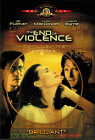
Mike Max (Bill Pullman) loves violence…when it’s on the silver screen, that is. You see, Max has made a very lucrative living for himself by producing ultraviolent movies, he’s one of the most powerful producers in Tinseltown in fact. So naturally, Max has no plans of ending his line of violent films, at least not until the money stops flowing in. But what if the type of violence Max puts on the big screen came into his personal life? Would a brush with some real life violence cause him to rethink his path to success? The answers are revealed to him when he encounters some violence much like the violence he brings to the theaters. When Max finds out some information he was never supposed to be aware of, the forces behind that information want to make sure Max can’t enlighten anyone else as to what he knows. If Max is able to survive, will he continue his violent cinematic patterns, or has a dose of the real thing taught him a lesson he won’t soon forget?
While this movie has some nice suspense, I can’t help but feel like I am watching a two hour sermon on violence in the movies. This feeling is with good reason, as director Wim Wenders intended this movie to stand as his artistic statement against violence on the silver screen. In the production notes, Wenders compares on screen violence to drugs, claiming the cinematic violence is addictive. Now, I admit I like violence, blood, and gore more than most, but comparing drugs to movie violence is like saying I would solicit a prostitute because I liked Pretty Woman. Since I have no appreciation for what Wenders is trying to drive home with this film, I have a hard time enjoying the movie itself, since I feel the movie is preaching at me, like enjoying violent cinema is a sin or something. If you are a hard-core suspense fan or follow the director’s work, then you should give this movie a try, otherwise it’s better left unseen.
While I don’t like Wim Wenders opinion on film violence, I do have respect for his talents as a director. His recent Buena Vista Social Club was outstanding, and starred Ry Cooder, who handled the music for this movie. Other Wenders films include Wings of Desire, Paris Texas, and The Million Dollar Hotel. The cast of The End of Violence is quite good, with strong performances by some name actors, as well as a decent supporting cast. Bill Pullman takes the burden of the film, and carries himself well enough. While Pullman (Brokedown Palace, Independence Day) isn’t a personal favorite of mine, he turns in one of his better serious performances here, although his voice is still annoying. The bulk of the supporting screen time is held by Gabriel Byrne (End of Days, Stigmata) and Andie MacDowell (Groundhog Day, Four Weddings And A Funeral), who underperform, but manage to outshine the others around them. The rest of the supporting cast includes Traci Lind (Class of 1999), K. Todd Freeman (The Cider House Rules), Loren Dean (Apollo 13, Mumford), and Daniel Benzali (Murder at 1600).
Video: How does it look?
The End of Violence is presented in a 2.35:1 widescreen transfer, which is not enhanced for widescreen televisions, with a full frame version on the flip side of the disc. While the image looks good, there are many instances of compression errors, which brings down the total visual impression quite a bit. The colors are replicated well, with bright and vivid hues, and flesh tones are natural and consistent as well. The black levels are also in order, with no visible detail loss and accurate shadow layering.
Audio: How does it sound?
The audio is presented in Dolby Digital 5.1, which offers a wonderful and rich audio tapestry for this film. While the audio is not as high impact as an action driven movie, the subtle audio is keyed to perfection, really offering a full audio experience. The dialogue sounds good as well, with no separation or volume issues.
Supplements: What are the extras?
The insert booklet contains some production notes, and the disc contains the theatrical trailer.