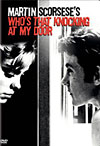
Plot: What’s it about?
J.R. (Harvey Keitel) is just an average young man, content to horse around with his friends and go with whatever comes up. He loves to spend time with his friends, but they often get into trouble and his life has minimal direction. His job options are limited and thanks to his bad attitude, that doesn’t appear to be changing soon. In other words, his wild lifestyle shows no signs of slowing down, at least not until he meets a very special girl (Zina Bethune). This young woman is a bright, intelligent, and very beautiful person, someone that any man would be lucky to be with, especially one as troubled as J.R. But the two meet and soon after, the sparks begin to fly and for both of them, life is about to be thrown into chaos. With this new love in his life, J.R. is ready to leave behind his friends, his neighborhood, and his old way of life, just so that he can provide the best life for his girl and himself. This causes all kinds of problems, but none as great as the turmoil that results when a dark secret is revealed. J.R. is stunned to learn that his new love was once raped, an event that has shattered her life. This also shatters J.R.’s life and his new vision on life, as he cannot move beyond this tragic turn of events. Will the past threaten to doom the future, or can J.R. find a way to move on and look toward brighter days?
Martin Scorsese is held up as one of cinema’s greatest creators in some circles, but I wouldn’t rank him as one of the elite filmmakers. Yes, he has a number of impressive movies to his credit, including at least two masterpieces, but he also has some real clunkers. In the 70s and early 80s, Scorsese was on a serious roll, hitting home run after home run, with such films as Raging Bull, Mean Streets and Taxi Driver, plus the often overlooked The King of Comedy. If this trend would have continued, he could have been an icon of cinema, but as we all know, his career couldn’t maintain that level of excellence. He has had some great films since, but more misses than hits, which is a real shame. But as we go back to his debut feature, Who’s That Knocking at My Door?, we can see how his talent has evolved over the course of his career. You can see the framework for his later work here, though the impact is not the same. In other words, his style has remained consistent, even from this first time out of the gate. I didn’t care much for this movie, but it has some moments and for fans of the director, it is worth a look. You can trace themes and elements back to this debut picture, then see how Scorsese has evolved as a filmmaker. Warner’s disc is about as good as it gets, so if you’re interested, a rental is recommended.
Video: How does it look?
Who’s That Knocking at My Door? is presented in 1.85:1 anamorphic widescreen. This is much better than I expected, but the source print shows some flaws, even if less than anticipated. The flaws include some small pops and larger debris, but never seem extreme and don’t distract much, so no serious complaints. The black & white image seems sharp and well defined here, as the contrast is stark and well balanced, which allows the image to surface in fine form. This has some rough spots, but on the whole, this is a terrific presentation.
Audio: How does it sound?
The included mono track offers a solid experience, but of course, lacks in terms of dynamic presence. I like the music used in this film a lot and while it seems a little dated, it sounds terrific in this mix, so I am very pleased. There’s not much to discuss in the realm of sound effects, but the slaps, glass breaks, and other elements seem in fine enough form here. No complaints with the dialogue either, which comes across as clean and crisp at all times. Not the most memorable audio effort, but it more than does the material justice, which is what counts. This disc also includes subtitles in English, Spanish, and French.
Supplements: What are the extras?
Martin Scorsese and assistant Mardik Martin provide an audio commentary track, which is more like an audio interview run over the feature. Not scene specific, but you’ll find some decent information if you stick around. A brief featurette is also included here, but in truth, the piece isn’t even worth a look unless you’re bored.