Plot: What’s it about?
They’re Young…they’re in love…and they kill people.
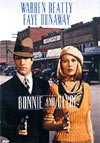
That’s not exactly a tagline you saw much in the 60’s, but then again “Bonnie and Clyde†wasn’t a very typical movie for that decade. Though somewhat of a failure upon its initial release, the movie caught on and was later nominated for ten Academy Awards including Best Picture (and Estelle Parsons walked away with a Best Supporting Actress statue to boot). Thought to be one of the more influential movies of the 1960’s, it is now looked upon as such. Right up there with “The Graduateâ€, “West Side Story†and “Midnight Cowboy†among others. But the thing that is most memorable about the movie is the glorification of violence. I don’t think I’m giving away anything when I say that the ending massacre forever changed the way film violence was perceived and even though Vietnam was in full force, people still didn’t want to see it when they went to the movies. My how things have changed since then. The movie was based upon the real-life duo of Bonnie Parker and Clyde Barrow (portrayed by Faye Dunaway and Warren Beatty respectively), who were depression-era bank robbers in the Southwestern part of the United States. And though the relationship between Bonnie and Clyde was a bit romanticized, what did they do that brought them to such a bloody demise?
Clyde Barrow (Warren Beatty) robs banks. He’s not expecting to run into someone that he’ll fall for, but fate has other plans. He meets up with Bonnie Parker (Faye Dunaway) as he is trying to steal her car. Out of sheer boredom, she decides to join him in his “adventures†and before long, we have a couple more additions that form the “Barrow Gangâ€. The gang is more interested in the attention they get, and their age shows not only their inexperience, but their arrogance and cockiness as well. The gang isn’t a bunch of cold-blooded killers like the media of the 1920’s makes them out to be (naturally, this is before the age of television and descriptions of the gang vary). They do it more for the experience of it all. Somewhat of “Robin Hoodsâ€, they don’t exactly steal from the rich and give to the poor; but the possess a sort of “Thieves Honor†(most notably when Clyde lets a farmer keep his money when he learns that it’s not the banks money just yet). Bonnie’s family seems to know that she’s living fast and hard and, in a memorable quote, her mother tells her “You live within a mile of me, honey, and you’ll be deadâ€. It’s this kind of foreshadowing that not only makes the movie better, but sets the stage for the impending final scene as well.
Like many movie couples, regardless if they’re loveable (Butch Cassidy and the Sundance Kid) or just other versions of Bonnie and Clyde (Thelma and Louise and Mickey and Mallory from “Natural Born Killers†come to mind) they work best as a team. Oddly enough, the movie recounts a bit of history that some of us might not realize. AT the time when Bonnie and Clyde were robbing banks, J. Edgar Hoover was forming the FBI. Seeing as how their robberies led from state to state, each state was sort of a new territory and new jurisdiction for the Barrow gang to conquer. The FBI was relentless in tracking the gang down and was mainly responsible for the execution Barrow and Parker. It’s highly doubtful that the real bank robbers looked anything like Dunaway and Beatty, but even the supporting cast does their best to try and keep up with the leads. Gene Hackman, in an early performance as well as Gene Wilder are standouts here and it would be very soon that both of them were well-established stars in their own right. Whether it’s the glorification of violence or a landmark in filmmaking, one thing is clear; “Bonnie and Clyde†is still as beloved today as it was at the time of it’s release.
Video: How does it look?
As one of the original releases on the format (DVD), “Bonnie and Clyde†was released as a full-frame only disc. Warner later re-issued this with an anamorphic transfer that showed some, but not much, improvement. The 1.85:1 anamorphic transfer would most likely look better if released again; with the technology improving all the time, this begs for a new digital restoration. However, until that happens, this is what we have. The colors are a bit muted throughout, though some (notably the ending scene) are bright and vivid. Dirt and grain can be seen throughout the print, but it doesn’t really distract from the action on screen that much. Though some might describe the transfer as “below par†considering the way some movies released before this look (“West Side Storyâ€, “The Hustlerâ€, etc.) this is currently the best thing on the market. In any case, the full-frame transfer does show a bit more on the top and bottom, but the widescreen version takes advantage of the anamorphic encoding. Result, watch the widescreen version.
Audio: How does it sound?
The original Dolby Digital mono track is all that’s present here and for the most part, it sounds fine. While some movies from this era take advantage of a 5.1 soundtrack on DVD, this relies on the dialogue and storyline to carry it. True, the sound in the shootouts and car chases would be a marked improvement, but the way this sounds right now isn’t all that bad. A banjo provides some of the overlay for some of the chase scenes and it’s easy to get into the action when the soundtrack takes over. Dialogue is rather clean and devoid of that “muddy†feel to it that’s associated with some mono tracks. On the whole, the audio here is about average, but pending an overhaul by Warner, this is all we have. The track serves its purpose here, plain and simple.
Supplements: What are the extras?
Warner has bee doing a great job with their “Two-Disc Special Editions†and this (in my honest opinion) is a prime candidate (along with “Cool Hand Lukeâ€, “The Wild Bunch†and “An American in Parisâ€) for that treatment. Until then, we have some text-based Production Notes and the original theatrical trailer.