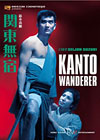
Plot: What’s it about?
Katsura (Ajura Kobayashi) is a gangster of the old school world, a man who honors and seeks to uphold the yakuza codes. The task is an honorable one, but also a difficult one, as most others don’t share his perspective. So while he is bound by the rules of the code, others can do as they please, which sometimes limits Katsura’s actions. He serves as the personal bodyguard to Izu, the boss of his branch of the yakuza. Izu has just won a large amount of concessions from the district overlord, which means his entire team stands to benefit. The payout has attracted the attention of a rival gang however, so the situation is quite dangerous. The rivals seek to interfere in the transaction and in the process, claim the concessions for themselves and gain a foothold over Izu’s forces. The rival boss Yoshida is ruthless and will do whatever is needed, even if it means violence and bloodshed. At the same time, Katsura searches for a schoolgirl, one who was lost in a gamble by a friend of his. The girl’s trade was against the code, so Katsura plans to find her and set the situation right. In his search, he comes across a woman from his own past and soon, he is facing some hard decisions. When he is forced to choose between his own emotions and the code of his profession, what will Katsura do?
I’ve seen countless yakuza pictures and while the genre is loaded with diverse material, most of the ones released in America are alike. These films usually have high levels of violence and low levels of depth. I don’t mind films of that variety, as the violence can be quite artistic and the visuals alone can often make such a film worthwhile. But not all yakuza films are of that design, as many focus on complex characters and dark situations, though violence is always a component, even if a minor one. Kanto Wanderer does indeed some violent outbursts, but the focus is on the characters and the varied paths they could take. The result is a tense, dark movie that has an unusual texture, especially for a yakuza driven picture. Then again, with director Seijun Suzuki (Tokyo Drifter, Branded to Kill) at the wheel, we have to expect some offbeat elements. But don’t expect his trademark kind of material, as Kanto Wanderer is more traditional than his best known work, yet still enough off kilter at times to have some edge. So the film can be complex and confusing, but if you have a solid attention span, this is worth the effort. Suzuki is able to conjure up a terrific movie in Kanto Wanderer, one that pulls all the right strings and winds up as a satisfying experience. So if you like yakuza films or Suzuki’s cinema, then check out this release.
Video: How does it look?
Kanto Wanderer is presented in 2.35:1 anamorphic widescreen. Home Vision has worked some magic with this treatment, as this movie looks brand new. The print has been shined up and shows minimal flaws, as grain and debris are infrequent. This allows the visuals to be sharp and display much depth, which is excellent news. Kanto Wanderer is a bright, colorful picture and as such, it is given justice in this presentation. The colors have a full, rich presence that showcases Suzuki’s use of color to perfection, but never allows the hues to bloom or become oversaturated in the least. I found contrast to be excellent as well, with smooth, deep black levels that serve as an ideal companion to the vivid colors. This is simply a fantastic visual effort from Home Vision, who has surpassed all expectations here.
Audio: How does it sound?
The original Japanese soundtrack is preserved here, via a somewhat dated, but more than acceptable mono option. This is a much cleaner, clearer presentation than I had expected, as very few age related defects can be heard. I heard a few minor pops and moments of harshness, but given the age of the material, this is a superb effort. Even the smallest sounds can be heard with ease, so nothing is ever drowned out or lost in the shuffle. No worries on the dialogue front either, as all the vocals are sharp and never muffled. This disc also includes newly refined, optional English subtitles.
Supplements: What are the extras?
This disc includes a Seijun Suzuki filmography, as well as the film’s theatrical trailer.