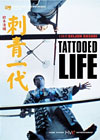
Plot: What’s it about?
Tetsu is an assassin known as The White Fox, who has worked as a hitman for the yakuza for a long while. After such extensive loyal service, he expected his exit from the business to be smooth, but that wasn’t the case. Tetsu carried out his final assignment, then planned to start a new life, one outside of the world of criminal deeds. But once he completed his final kill, he was attacked and almost murdered by a high level bodyguard. The bodyguard worked for the yakuza boss, which meant his orders came straight from the top levels of the organization. The attack would have been lethal, but Tetsu’s younger brother Kenji intervened. Kenji steps into the attack and dispatches the bodyguard, which eliminated the immediate threat. But now, the two brothers have even more to be concerned about, as the yakuza is out for vengeance. The boss wants Tetsu dead no matter what the cost and since Kenji interfered in his plan, the orders are to put both brothers to death. An escape to Manchuria is prevented, which leads Kenji and Tetsu to work as part of a construction team. This allows them to stay low and out of harm’s way, but soon enough, new kinds of trouble manage to surface. When romance blossoms for Tetsu, will he keep his past a secret and sacrifice his new love, or will he reveal the dark truth?
Seijun Suzuki is a filmmaker best known for his quirks, as he crafted some offbeat and often masterful films. His most unusual works seem to define him with some folks, but in truth, Suzuki knew how to work within the system. A lot of his pictures were commercial successes, but his usual style trademarks weren’t absent. In other words, Suzuki knew how to bend and shape the rules to suit his own needs, a rare talent indeed. But of course, he pushed the limits a little too much, a little too often and he was fired from his post at Nikkatsu. Tattooed Life is a prime example of how Suzuki had mastered the system, as he is able to squeeze in his own artistic touches, but also manages to retain the commercial value of the picture. If you come in expecting another Branded to Kill, you’ll be let down, as this was not made in that same vein. In fact, fans of Suzuki might be put off by the slow pace and rather typical visuals. This shouldn’t be worrisome however, as the filmmaker injects his subtle cues and the wild conclusion has his signature in bold letters. The attention to detail is good and the premise keeps things logical, so don’t come in looking for an off the wall, nonsense laden picture here. Home Vision’s disc is bare bones, but the movie is well worth a look, so if you’re interested, check out Tattooed Life.
Video: How does it look?
Tattooed Life is presented in 2.35:1 anamorphic widescreen. This is a superb visual transfer, but some age related flaws do emerge at times. The print looks very clean, with some light grain and debris on hand, but these problems are minor at worst. There is some slight softness due to the print defects, but again, this never proves to be a serious issue. The colors aren’t hindered, which is good, since the hues are bright and bold. Not the usual electric colors Suzuki used, but still vivid hues. The contrast is smooth and consistent also, no loss of visible detail to mention. So while not a perfect transfer, this is a great effort from Home Vision.
Audio: How does it sound?
The audio here, which preserves the original Japanese language and might not too memorable, is still a solid track. I heard little in terms of distortion, while hiss is absent and that’s great news, without a doubt. The music here is quite good and is well presented, though of course, it isn’t too expansive, thanks to the material’s limitations. The sound effects follow the same order, as they sound good, but also restrained to some extent. But this isn’t exactly new showroom material, so I think we can cut it some slack. The dialogue is sharp and never gets muffled much, so even if you can’t understand what they’re saying, at least it sounds clean. This disc also includes English subtitles, should you need those.
Supplements: What are the extras?
This disc includes Suzuki’s filmography, but no other bonus materials.